Showing posts with label Bulaneño. Show all posts

Saturday, May 18, 2024

Waray-Sorsogon Musical ‘Dayaw, Sa Bilog na Bulan’ to Open in Bicol this May


BALUD (Bulan Artists League United for Drama) Theatre Company, a group of artists from Bulan, Sorsogon, is set to stage its second production following its maiden production, Nano Daw Kun, last November.


Entitled Dayaw, Sa Bilog na Bulan, the production is an original Waray-Sorsogon musical that will be staged from May 24-26, 2pm and 7pm, at the ALD Function Hall in Bulan, Sorsogon. Waray-Sorosogon (or Bikol-Bulan) is a vernacular spoken in Southern Sorsogon.

Sa kagustuhang makahanap ng kahit na anong aklat kung saan nasusulat ang pinagmulan ng kaniyang bayan, napadpad ang teenager na si Vincent sa isang sinaunang pamayanan na sumasamba sa buwan. Sa pakikipamuhay niya roon, matutuklasan niya ang kultura, tradisyon, at politika ng kaniyang mga ninuno bago pa dumating ang mga banyagang mananakop. Isang masayang paglalakbay sana ito para kay Vincent hanggang sa balutin ng takot ang pamayanan dahil ayon sa mga matatanda, mangyayari na ang pinakamalagim nilang panaginip. Muling mabubuhay ang Bakunawa na magdudulot ng delubyo sa kanila. Mapipilitan si Vincent na makipagsapalaran upang mailigtas ang pamayanan at upang lubos niyang makilala at maunawaan ang sarili at ang kaniyang kasalukuyan.

The cast features Eli Borlagdan, Io Frenzy Bautista, Mark Justine Pelenia, Haide Geralde, Maricris Gepiga, Glifford Gigantone, Maan Porcalla, Megan Aycocho, Aljo Alunan, Chase Gicaro, Jett Gutlay, Noel Oro, Kent Pagkaliwanagan, Exequiel Gipit, Arvin Garra, Rodlyn Althea Goyala, Princess Macoy, Joshua Godalle, Mark Luis Enteria, and Justin Mortega.

Dayaw, Sa Bilog na Bulan is written by Jan-Jan Mohametano (book and lyrics). At the helm is director Drew Espenocilla, who also serves as choreographer.

Joining them in the artistic team are Eli Borlagdan (musical direction), Angelica Dayao (musical arrangement), Chase Gicaro (production design), and Renee Liana Golimlim (lighting design), Clifford Morata (technical direction), Jan Lorens Grieta (assistant direction and stage management), Mark Luis Enteria (production management), and Drew Espenocilla (graphics).

Tickets are P1,600 (VVIP), P900 (VIP), P600 (Regular), and P250 (Gen Ad). They are available for purchase at Zone-5 Brgy Hall, Zone-5, Bulan, Sorsogon. Audiences can also buy through Gcash: Mark Luis Enteria, 09156285463.

The Bulan Artists’ League United for Drama (BALUD) Theatre Company is a group of artists committed to promoting the arts and culture of Bulan, Sorsogon, through theater. BALUD’s goal is to celebrate and establish Bikol Bulan’s vernacular as a legitimate and vibrant variation of the Bikol language.


Reminder

Avoiding Foreign Manipulation: Weaponizing myths and stories and using them as an excuse to attack, harass and even stalk storytellers or communities risks distorting their purpose. Myths are meant to unify, educate, or entertain, not to create division or hostility among Filipinos.


Filipino mythology belongs to everyone—Filipinos, Filipinix, and even foreigners. These stories are meant to unite, inspire hope, and empower. They are for all, ever-evolving yet forever a cultural treasure.

Both oral and written mythology in the Philippines are valid because they serve different but equally important roles in preserving Filipino heritage. What is truly harmful is when foreigners manipulate these discussions for personal gain, attempting to invalidate one aspect of Filipino mythology to cause division. Instead of falling for such tactics, Filipinos should embrace the richness and diversity of their own stories, ensuring that both oral and written traditions continue to thrive.

Orally transmitted stories undergo variations and evolve over time, resulting in numerous different versions. There are many different version told by Filipinos, and retold by Filipinos.

The orally transmitted mythology of the Philippines is intended for sharing and understanding. It is a dynamic narrative tradition that evolves over time, distinct from the standardized mythologies found in Western and European cultures. Unlike these established mythologies, the Philippine government has not mandated standardized versions of stories and legends.

Orally transmitted stories undergo variations and evolve over time, resulting in numerous different versions. There are many different version told by Filipinos, and retold by Filipinos.


Thursday, March 14, 2024

sun and moon worship in myths in all ancient cultures

 The Sun and the Moon


Ancient civilizations across the globe often worshipped the sun and the moon due to their fundamental roles in sustaining life and shaping the natural world. The sun, with its warmth and light, was seen as the source of life, energy, and fertility. It provided warmth for crops to grow, governed the seasons, and illuminated the world, making it a symbol of power, vitality, and divine presence.

Similarly, the moon, with its cycles of waxing and waning, was associated with rhythms of time, fertility, and the tides. Its gentle glow in the night sky guided travelers, regulated agricultural calendars, and inspired awe and wonder. Moreover, the moon's luminousity connection to androgen gods, and the feminine aspect of creation led to its association with and cycles of birth and rebirth.

Adlao and Bulan of Bicol


Sun and Moon in Oral Bikolano mythology very symbolic

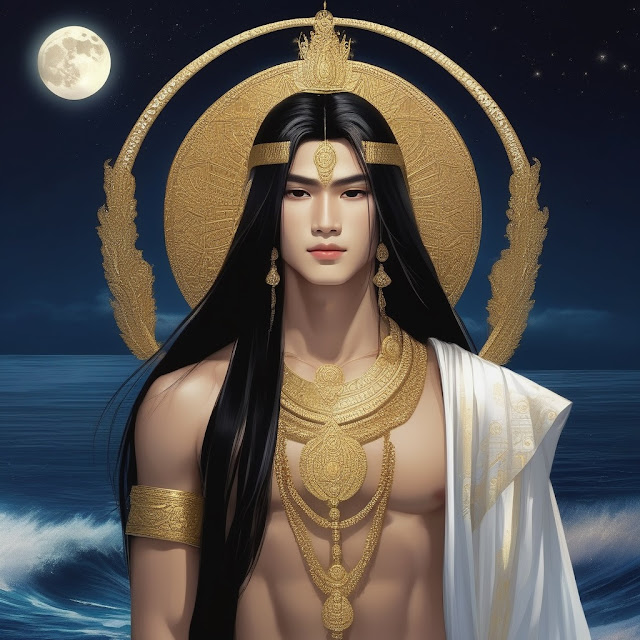
In mythology the divine brothers Adlao and Bulan, In the case of the Bicolano people, their worship of the sun and the moon likely stemmed from similar reverence for these celestial bodies' life-giving and transformative properties. Adlao, the sun deity, embodies the radiant brilliance and vitality of the sun, depicted as a being of pure gold, while Bulan, the moon deity, reflects the gentle luminosity and cyclical nature of the moon, depicted in copper in celestial form. In their earthly manifestations, Adlao appears as a robust young man with golden-tanned skin, mirroring the sun's warmth and vitality, while Bulan takes on the form of a comely adolescent boy with delicate features and pale skin, reminiscent of the moon's ethereal glow.

The worship of the sun and the moon in the myths and stories among the Bicolano people, like in many ancient civilizations, served not only as a means of understanding and honoring the natural world but also as a way to connect with the divine forces that governed life and existence. These celestial bodies were revered as gods, revered for their power, beauty, and significance in shaping the world and the destiny of humanity.

Moon and Sun in other mythologies

Aldo and Bulan


Agueo and Bulan of Pangasinan mythology

Very similar stories can be found in the mythology of the Pangasinan people of Asinpalan

In Pangasinan mythology, Ama, the supreme deity, created humanity and bestowed divine grace upon them. He had two favored celestial children: Agueo, the serious and obedient sun god with golden tan skin, and Bulan, the playful and luminous moon god. Ama gifted them with palaces of golden and silver hues, respectively.

Agueo and Bulan worked together to provide light to humankind, with Agueo following his father's commands diligently while Bulan enjoyed playing tricks with his moonlight. However, one night, Bulan's mischief led to a quarrel between the brothers. Ama, angered by Bulan's actions, threw a rock that shattered Bulan's palace, creating the stars known as Bituen.

As punishment, Bulan was forbidden from joining Agueo in his celestial journey and tasked with dimly illuminating the paths of thieves with his fractured palace, serving as a reminder of his playful transgressions.


REMINDER

The orally transmitted mythology of the Philippines is intended for sharing and understanding, not for appropriation, commercial exploitation, or the promotion of foreigners. It is a dynamic narrative tradition that evolves over time, distinct from the standardized mythologies found in Western and European cultures. Unlike these established mythologies, the Philippine government has not mandated standardized versions of stories and legends. 

Orally transmitted stories undergo variations and evolve over time, resulting in numerous different versions. There are many different version told by Filipinos,and retold by Filipinos in the Philippines and abroad. Filipino artist and Support Local Story Tellers

Wednesday, September 11, 2019

SI BULAN DIWATA NG BUWAN

Bulan diwata ng Buwan


Si Bulan ang sinaunang diwata ng buwan sa mitolohiyang Bikolano, siya ang mataas na diwata o diyos ng Buwan. Sinaunang kumakatawan sa liwanag at proteksyong hatid ng buwan.
Si Bulan ang diyos ng Buwan sa Ibalong, siya ang Sinaunang diyos ng Buwan na hinalilinan at ipinagtatangol ni Haliya

Bulan


Ang Bulan at ang Adlao at pinagbubunyi at kinaririktan ng mga sinaunang tao ng Ibalong. Gaya ni Adlao Muling nagbalik mula sa kawalan patungo sa kamaurayan si Bulan. Inilagay ni Poong Gugurang si Bulan sa kalangitan. Mula sa lupa hindi mapantayan sa kalangitan ang liwanag ni Bulan ay matatanaw.


Sa mga kwento si Bulan ay may katawang gawa sa bronse o tanso ngunit kapag siya ay bumababa sa lupa siya ay nagkakakatawang tao bilang magandang lalaki o binata. Sinasabing Walang kapintasan ang kanyang maamong mukha. Isang magandang binata ang anyo ni Bulan. Makinis at tila sutla at napakaputi ng kanyang balat. Ang kanyang mahabang buhok at mata ay sing itim ng hating gabi.


Nilagay ni Gugurang sa kaitaasan si Bulan, Ngunit malungkot ang nagiisa. Mula sa kanyang liwanag nilalang niya ang isang napakagandang diwata, magkahalintulad ang kanilang kinang. Magadang diwata na si Haliya. Ngunit magkasalungat ang kanilang gawi at ugali. Si Bulan ay mayumi, pala ngiti, malambing at mapaglaro samantalang walang kibo at hindi nagpapakita ng damdamin si Haliya.
Nilalang ni Gugurang ang mga tawong lipod o mga mababang uri ng diwata ng ulap at hangin upang makasama at paglingkuran ang mga dayaw na si Haliya at Bulan.


Bulan ang diwata o diyos ng Buwan sa mitolohiyang Bikolano

Bulan god of the Moon


Sinasabing napaka amo at napaka dalisay ng wangis ni Bulan, sa kanyang pag baba sa lupa mula sa langit ang kanyang kinam ay di mapantayan. Nang makita ng mga halimaw at aswang ang kanyang wangis ay pansamantala silang naging maamo. Nang makita ng mga ibon at lumilipad na nilalang ang kanyang mukha ay nagsilaglagan sila, ang mga isda ay pansamantalang nalimutang lumangoy. Maging ang mg mababangis na aswang ng dagat na magindara ay napaamo ni Bulan. 


Ang bulaklak ng Sawa at bulaklak ng Takay

Ang mga taong lipod ay ang mga ispiru ng hangin at ulap, sila ang mga mababang diwata na siyang naglilingkod sa mga dayao. Nais ng mga tawong lipod matuklasan kung ano ba ang mayroon sa lupa. Sakanilang pagtataka at paguusisa ay di sinasadyang marinig ni Haliya ang mga ito. Kimubinsi ng mga taong lipod na bumama sa lupa si Haliya, si Haliya naman ay pinilit si Bulan na sumama pababa sa lupa. Noong una ay ayaw pa ni Bulan bumaba sa, ngunit sa pag pupumilit ng kapid ay pumayag na rin ito. 


Mula sa kaintaasan ng kamurayan ay dahang dahang bumaba si Haliya at Bulan, kasunod ng mga tawong lipod. walang kupas ang kinang ng dalawa, ang pag baba ni Haliya at Bulan ay isang kagilagilalas na pangyayari. Sa kanilang kagandahan ay napatingil sa pag lipad ang mga ibon at mga lumilipad na nilalang. Pagtapak sa lupa ni Haliya at Bulan ang mga halimaw ng lupa ay pansamantalang naging maamo.Dahil sa kanilang taglay na kagandahan ang mga mababangis na aswang dagat na magindara ay naging maamo. Sa labis labis na kagandahan at busilak na liwanag na kanilang taglay pansamantalang nalimutan ng mga isda na lumangoy. Nagtampisaw sa lawa ng Bato si Haliya at Bulan. Ang mga halaman ay nag bulungan at nahiya. Tinanong ni Haliya ang mga ito. Sumagot ang mga halaman na hindi sila karapat dapat kausapin ng mga Buwan dahil sila ay mga halamang tubig lamang. Naantig si Haliya at Bulan sa mga kataga ng halaman. Bilang gantimpala sa kababaang loob pjnagkalooban nila ng kagandahan ng mga ito. Ang mga halaman ay naging bulaklak ng sawa (lotus)at bulaklak ng takay.(water hyacinth). Ang mga bulaklak na ito ay kumakatawan sa kababaang loob kanilisan ng kalooban ng puso. Makikitang kahit sa pinakamaputik na lugar ay namumukadkad ng nakaangat ng walang bahid ang mga ito. Ang tangkay naman ay nanatiling nakababad sa putik, simbulo na kailan man ay hindi mag mamataas.


Ang bulaklak ng sawa at ng takay ay kumakatawan sa pagiging mabait, mapagkumbaba at pagiging palakaibigan ng mga Bikolano. Ang putik at yurak na tinutubaan ng mga ito ay ang pasakit at paghihirap sa buhay na hindi maiiwasan, ang mamumukadkad ng mga bulaklak ay kumakatawan sa kalinisan ng budhi at pagiging masikap ng mga Bikolano. Ang tangkay na nakalubog sa putik ay gaya ng mga paang nakatapak sa lupa, ang magiging mabait at mapagkumbaba.


Bilang mga mahalagang bulaklak, sagisag ngl uklukan ng mga diwata o diyos ng Buwan ito ng malinis na budhi at kababaang loob


Bulan


Ang Bakunawa

Matagal nang humahanga at umaasa ang Bakunawa na mapasakanya ng Buwan.
Maraming ibat ibang  kwento tungkot sa Bakunawa, laganap sa buong kapuluan. Sa Ibalong ,Ang bakunawa ay isang sinaunang diwata, isang diyos sa kailaliman. Gaya ng ibang nilalang nabighani ang si Bakunawa sa taglay na ningning ng mga dayao. Laging pinagmamasdan, laging tinitingala at laging umaasa si Bakunawa na mapansin manlang siya ni Bulan. Siang gabi bumaba mula sa kalangitan si Bulan at si Haliya. Masayang nag tampisaw at lumangoy kasama ng mga Magindara o sirena. Napagtanto ni Bakunawa na ito na ang tamang panahon upang lumapit at magtapat sa Bulan na kanyang laging tinitingala at tinatanaw. 


Nanglumapit si Bakunawa ay hindi siya napansin ni Bulan, pagkat ito ay masayang lumalangoy at nakikipaglaro sa mga sirena at iba pang nilalang. Napuno ng pag iimbot at galit si Bakunawa, ang tamis ng kanyang pagsinta ay napalitan ng pait at hapdi. Pinangako niya na mapapasakanya si Bulan. Nagpalit anyo ang diwata ng kailaliman, siya ay naging malaking nilalang na may kaliskis, isang dambuhalang halimaw na ang bibig ay sing-laki ng lawa. 


Mula sa kaibuturan ng dagat ay umabon ang Bakunawa upang lamunin si Bulan. Napansin ni Haliya ang paparating na panganip. Kanyang sinuot ang kanyang gayak pandigma, kinuha ang kampilang yari sa liwanag ng mga bituoon, at ang maskarang ginto. Kinalaban ni Haliya ang dambuhalang Bakunawa upang iligtas ang kanyang kapid. Nakita ni Gugurang (ang pinaka makapangyarihang diyos) ang mga naganap. Pinarusahan niyang manatiling anyong dambuhalang halimaw si Bakunawa. Simula noon ay katungali na ni Haliya ang Bakunawa. Tagapag tangol ni Bulan si Haliya laban sa Bakunawa.


Diwata ng Buwan


REMINDER

The orally transmitted mythology of the Philippines is intended for sharing and understanding, not for appropriation, commercial exploitation, or the promotion of foreigners and foreign products. It is a dynamic narrative tradition that evolves over time, distinct from the standardized mythologies found in Western and European cultures. Unlike these established mythologies, the Philippine government has not mandated standardized versions of stories and legends.

Orally transmitted stories undergo variations and evolve over time, resulting in numerous different versions. There are many different version told by Filipinos,and retold by Filipinos.

Sunday, January 24, 2016

How BULAN got it's name


BULAN SORSOGON


Ang pangalang Bulan ay pinaniniwalaang galing sa salitang nangangahulugang “buwan” o “liwanag.” Ayon sa folk etymology, nagmula ito sa diyos ng buwan na si Bulan sa mitolohiyang Bikolano. May alamat din na nang dumating ang mga Kastila, tinanong nila ang mga tao tungkol sa buwan at sumagot ang mga ito ng “Bulan,” kaya iyon ang naging pangalan ng lugar.

Ang Bulan ay isang bayan sa Sorsogon na kilala bilang “Fishing Capital of Bicol.” Mahalaga ito sa kalakalan at mayaman sa kasaysayan at kultura.


Bulan, officially known as the Municipality of Bulan, is a 1st class municipality located in the province of Sorsogon, Philippines It is nicknamed the "Fishing Capital of Bicol" and is recognized for hosting the Padaraw Festival. The town's motto is "Unhan Bulan."

Known as one of the Top Five Municipalities with the Highest Operating Income in Bicol, Bulan holds ISO accreditation, the Seal of Good Financial Housekeeping from DILG, and other distinctions.Geographically, Bulan is situated at the southwesternmost tip of the Bicol Peninsula on Luzon Island, covering an area of 20,094 hectares. It serves as a vital center for trade and commerce in its region, consisting of 55 barangays and eight zones with a diverse population. Bulan is bordered by Magallanes to the north, Juban and Irosin to the east, Matnog to the south, and Ticao Pass to the west. It is approximately 667 kilometers from Manila, 63 kilometers from the provincial capital Sorsogon City, 20 kilometers from Irosin, and 30 kilometers from Matnog.


Long ago, the town of Bulan got its name through a fascinating legend. In the local Bulaneno dialect, "Bulan" had different meanings like the month of the year, the moon, or a luminary. According to a local historian named Valerio Zuñiga, the term's intrinsic sense, meaning a luminary, became widely accepted due to a historical event narrated by the old inhabitants of the town.

The tale goes that during a Spanish scouting expedition, sailors saw a big and beautiful moon from their ship near Otabi, and the natives who guided them expressed joy upon seeing it. In memory of this event, the Spaniards named the place "Bulan" when they landed. Another version involves two fishermen ashore, thinking the Spaniards asked about the full moon, and answering, "Bulan."

Folk Entymology however suggest that the name Bulan comes from the great spirit of the moon, named Bulan. Same name and the personification of the moon itself in Bicolano oral mythology.


Historical records reveal the name's evolution from "Bililan" to "Builan," and eventually "Bulan."

In the pre-Spanish period, archeological evidence shows thriving communities along the coasts of Sorsogon, dating back to 4,000 B.C. The southernmost tip of Luzon, possibly including Bulan, displayed signs of civilization as early as 960 A.D., with excavations supporting these theories.

In oral mythology, Bulan gained significance as a place where the Moon deity descended from the heavens to bathe in the waters of Bicol. Some believed that the town, situated at the southwestern tip of the Bicol Peninsula, was named in homage to this lunar association. According to oral stories, the spot was considered enchanting, especially during the pale full Moon, believed to be where the lunar deity immersed in the pristine waters of Ubo Falls.


During the Spanish period in 1569, Captain Luis Enriquez de Guzman and Fray Alonzo Jimenez reached Sorsogon, finding a settlement believed to be Otavi. The town underwent various names like "Bililan" before officially becoming "Bulan" as a royal encomienda. The Franciscans began their work in 1583, establishing Gate as a visita of Bulusan. In 1690, "Builan" became a pueblo civil, and Gate was chosen as the town site.

However, Bulan faced challenges during the 19th century due to intense Moro raids. In 1746, a devastating Moro attack destroyed Gate, resulting in the plunder and destruction of Bulan. The town was abandoned, erased from maps for 55 years before reappearing and continuing its journey through history.


Bulaneño Children of the moon,