Welcome to the quirky realm of Bicolano lower mythology, where mischievous creatures and peculiar beings add a touch of whimsy to the supernatural tapestry. Let's embark on a fun exploration of some lesser-known mythological creatures that make Bicol folklore delightfully distinctive!
PATIYANAK - The Mournful Fusion
 |
| PATIYANAK |
Meet the Patyanak, a spooky fusion of an untimely discharged human fetus and a tiny black bird. Picture it with large round ears, a completely bald head, and an eerie, mournful wail resembling that of an infant. Legend has it that if a pregnant woman hears its cry during the night, a miscarriage might be on the mystical horizon!
 |
| PATIYANAK |
PATIYANAK - Patyanak in Bicol folklore is a frightening entity, is a fusion of an untimely discharged human fetus and a tiny black bird. Upon reaching maturity, it exhibits distinctive features such as large round ears and a completely bald head. Its eerie, mournful wailing closely resembles that of an infant, and if heard during the night by a pregnant woman, it is believed to induce a miscarriage.

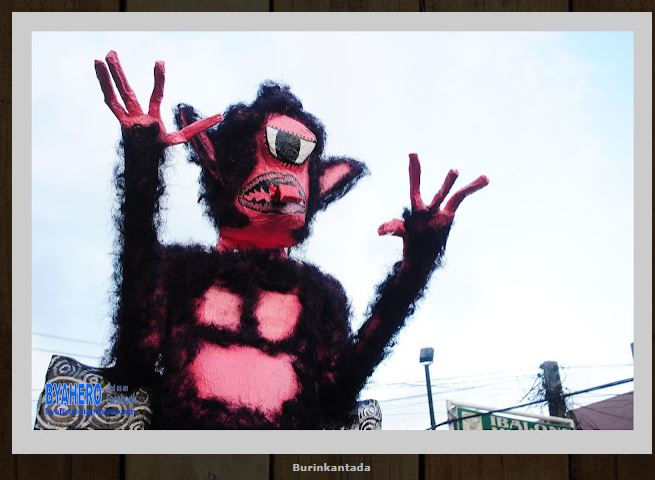
BURING - The Swamp Symphony Maestro In the swamps of Ponong lurks the Buring, a menacing maestro with one eye and three throats. Imagine its spine-chilling howl in three distinct tones, accompanied by black, razor-sharp hair inducing unbearable itchiness. Sharp claws and teeth complete its terrifying ensemble, making encounters a nightmarish symphony.
 |
| Buringkantada of Bicol mythology |
Buringkantada can be transliterated into Enchanted cyclops
BURING - The Buring also called Buringcantada in Bicolano mythology is a menacing creature dwelling in the swamps of Ponong, possesses a single eye and three throats. Emitting a spine-chilling howl in three distinct tones, this monster is adorned with black, razor-sharp hair that induces unbearable itchiness upon contact. Its formidable physique is equipped with sharp claws and teeth, adding to the terror it instills in those who encounter it.
BONGO - MUSCLED MONSTER
.JPG) |
| Bonggo |
Meet Bonggo, the feared minister of the deity Aswang. With sunken eyes flashing fire, this ferocious, large, and muscular black humanoid strikes terror with long, black hair, an ugly hairy face, and sharp claws. Vengeful and utterly cruel, Bonggo embodies fear itself.
.JPG) |
| Bonggo |
Bonggo in Bicol mythology is the dreaded an ancient type of Aswang minister of the deity Asuang, instilled fear with its fiery, sunken eyes. This formidable being was a massive, muscular black humanoid, adorned with long, black hair and a repulsively hairy face. Armed with razor-sharp claws, Bonggo embodied ferocity and cruelty, displaying vengeful tendencies that struck terror into the hearts of those who encountered it.
POPO - The Heartless Grunter Hailing from the underworld, the heartless Popo is a creature with ominous eyes, emitting grunts akin to a pig. Its touch on a child's head seals a fate of steady weakening until succumbing to an ominous end. Beware the wrath of the Popo, for it embodies vengeance and irritable malevolence.
IBINGAN - The Whistling Guardian
 |
| IBINGAN |
Say hello to Ibingan, a fearsome multi-horned red serpent with distinctive fins. When provoked, it spits venom, but in moments of happiness, it whistles beautifully. Perched atop rocks near deadly mermaid caves, Ibingan acts as their guardian, with a deadly tactic of crushing victims under sheer force.
 |
| IBINGAN |

IBIGAN- Ibingan In bicol folklore is a fearsome creature, manifested as a multi-horned red serpent with distinctive fins on its head and back. When provoked, it spat venom, yet its moments of happiness were marked by beautiful whistling. Perching atop rocks near the entrances of caves inhabited by lethal mermaids, Ibingan served as their guardian, shielding them from harm. Its deadly tactic involved crushing victims under the sheer force of its impact.
YASAW - The Playful Pranksters

Now, let's meet the mischievous Yasaw, resembling dark-skinned small children with a penchant for playful pranks. While they don't harm humans, they hide under trees during moonlit nights, relishing in scaring unsuspecting folks. If spotted with an infant-like cry, brace yourself, for an Aswang might be on the prowl!

 |
| Yasaw of Bicol mythology |
Yasaw in Bicol mythology, the Yasaw are mischievous creatures resembling dark-skinned small children, known for their playful pranks that aim to create fear and amusement. Despite their mischief, they do not harm humans. it hides under the shadows of trees during moonlit nights, delighting in scaring people. If seen simultaneously with a cry resembling that of an infant, it is believed that someone is destined to die soon, as an Aswang is on the prowl. Moreover, the Laki, or Laqui, is a type of Asuang that was once a Yasaw that tasted human blood. Initially playful pranksters, they transform into flesh-eating monsters after indulging in human blood. As punishment for laziness in scaring people, the Yasaw morphs into the Laki, featuring hooves and goat-like skin with an ugly human face. Appearing at night, the Laki surprises night travelers with its shrill, piercing sound, although it is incapable of causing harm.
LAQUI - The Transforming Trickster
 |
| LAKI |
Last but not least, say hello to the Laki or Laqui, a shape-shifter with an upper body resembling a human and a lower body with goat-like features. Originating from the Yasaw, this creature transforms when punished for laziness, becoming a flesh-eating monster. With hooves, goat-like skin, and an ugly human face, the Laki startles night travelers with its piercing sounds, adding a touch of eerie surprise to the Bicolano night.
 |
| LAQUI |
The Laki or Laqui In Bicol mythology A Laki is a creature with an upper body that resembles that of a human. It boasts a well-defined chest, muscular arms, and a human-like, albeit ugly, face. The lower body of the Laki is distinctly goat-like, characterized by hooved legs and a fur-covered hindquarter. A Laki originates from the mischievous Yasaw, a dark-skinned entity resembling small children known for its playful nature and love for pranks. When a Yasaw is punished by Aswang, a deity in Bicolano mythology, for perceived laziness in scaring people, it undergoes a transformation into the fearsome Laki or Laqui. In other stories is a type of Asuang that are once Yasaw who have tasted human blood. The once playful pranksters will become flesh eating monsters once they taste human blood. The Laki possesses distinct characteristics, featuring hooves resembling those of a goat, skin mirroring the texture of a goat, and an ugly human face. Despite its nightmarish appearance, the Laki is incapable of directly causing harm to humans. Instead, it startles night travelers with its shrill, piercing sounds, creating an atmosphere of eerie surprise.
So, as you venture into Bicol mythology, brace yourself for a whimsical journey filled with quirky characters and legendary tales!