Showing posts with label Aswang Gabunan. Show all posts

Friday, September 12, 2025

Puting Gabunan


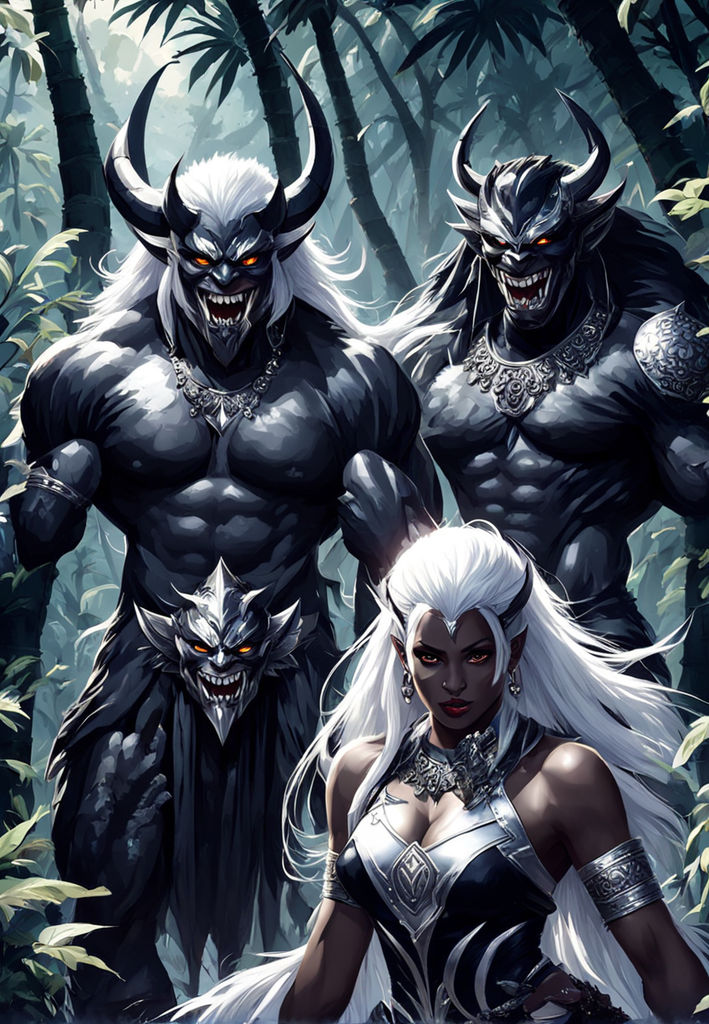
Ang Puting Gabunan ay isang bihirang nilalang na ipinanganak mula sa pagmamahalan ng diwata at aswang. Dahil dito, kakaiba sila sa ibang aswang.Hindi sila tulad ng karaniwang aswang na nananakit o kumakain ng tao. Sa halip, kadalasan ay mabuti sila at tumutulong pa sa mga tao laban sa masasamang nilalang. Malalaki at malalakas ang kanilang katawan, at may mahahabang puting buhok na parang kumikislap sa dilim. Minsan, kaya rin nilang mag-anyong puting aso o parang taong lobo.

Mayroon silang matinding lakas, tapang, at panlaban sa mahika. Dahil sa dugo ng diwata, mabuti ang kanilang kalooban, ngunit dahil may dugo rin silang aswang, hindi sila lubos na tinatanggap ng alinman sa dalawang mundo.Sinasabing mas lumalakas sila kapag may buwan, lalo na kapag kabilugan, dahil dito nagmumula ang balanse ng kanilang kapangyarihan.

Kadalasan, inilalarawan ang Puting Gabunan bilang nag-iisang tagapagtanggol ng tao malakas, misteryoso, at mabuti kahit nagmula sa dilim.


The Puting Gabunan is a rare type of aswang in Philippine mythology. According to traditional stories, it was born from the forbidden love between a diwata (nature spirit) and an aswang. Some versions say a male diwata fell deeply in love with a female aswang, while other stories say it was the aswang who desired the diwata. From this unlikely union came children who were different from ordinary aswang. These beings became known as the Puting Gabunan, and the diwata and aswang couple are considered their ancestors.

Unlike most aswang, who are known for harming or eating humans, the Puting Gabunan usually do not attack people. Because they carry the blood of a diwata, they are naturally inclined toward goodness. In many stories, they are even seen as allies of humans, fighting against evil aswang. In their aswang form, they are described as tall, large, and extremely strong, with long white hair that seems to glow in the dark. Other aswang fear them because of their great strength and their brutal fighting ability.

Some stories, especially in more modern times, describe the Puting Gabunan as resembling white lycanthropes or white werewolves. This image is sometimes linked to Spanish and Western influence. Other explanations say this wolf-like form comes from their diwata blood. In folk stories, male diwata are often shapeshifters who can turn into white owls or white dogs. When this shapeshifting ability mixes with aswang blood, it results in the wolf-like or lycanthrope form of the Puting Gabunan.


The Puting Gabunan possess unusual powers inherited from both sides of their bloodline. They are far stronger than ordinary aswang and are known for their courage and cruelty in battle. They also have resistance to magic and are not easily affected by curses or sorcery. Most importantly, they have an inner moral sense and usually choose to protect humans rather than harm them. However, because they are born from both diwata and aswang, they are not fully accepted by either world. Aswang fear them because they are powerful and do not follow traditional aswang behavior, while diwata hesitate to accept them due to their connection to darkness.

Stories say the Puting Gabunan have a strong connection to the moon. This link reflects their mixed blood. Aswang are associated with night and darkness, while diwata are tied to nature and light. The Puting Gabunan stand between these two forces. When the moon shines, especially during a full moon, their strength increases. From their diwata side, they gain power from the moon’s light, which symbolizes purity and balance. From their aswang side, their strength and form are affected by the night.

Because of this, many believe the moon helps balance their nature. The Puting Gabunan do not fully fall into darkness like other aswang, but they also cannot return completely to the light of the diwata. This balance defines who they are.

In legends and folktales, the Puting Gabunan are often portrayed as solitary beings. They usually have no tribe and no allies of their own kind. Many stories describe them as lone protectors of humans, fighting monsters and evil spirits. Yet because they are half-aswang, they are never fully welcomed by the diwata. This is why they are often shown as wandering warriors traveling alone, fighting evil, but never truly belonging to either side.

In modern retellings, the Puting Gabunan are sometimes portrayed like heroic figures from films or fantasy stories. They are shown as powerful, mysterious beings who represent hope the idea that even in a world filled with darkness, goodness can still exist.


REMINDER

Avoiding Foreign Manipulation: Weaponizing myths and stories and using them as an excuse to attack, harass and even stalk storytellers or communities risks distorting their purpose. Myths are meant to unify, educate, or entertain, not to create division or hostility among Filipinos.

Filipino mythology belongs to everyone Filipinos, Filipinix, and even foreigners. These stories are meant to unite, inspire hope, and empower. They are for all, ever-evolving yet forever a cultural treasure.


Both oral and written mythology in the Philippines are valid because they serve different but equally important roles in preserving Filipino heritage. What is truly harmful is when foreigners manipulate these discussions for personal gain, attempting to invalidate one aspect of Filipino mythology to cause division. Instead of falling for such tactics, Filipinos should embrace the richness and diversity of their own stories, ensuring that both oral and written traditions continue to thrive.

Don’t Stalk or Harass Storytellers Online.

This should be obvious butt some folks need the reminder. Disagreeing is fine, but attacking, doxxing, or bullying creators? Big no-no. You’re not “correcting history,” you’re just being creepy. Respect the people keeping these stories alive.

Foreigners Please don’t use Filipino myths to farm views, start drama, or pit Filipinos against each other. These stories are meant to unite, not divide. If your content is causing more fights than fascination, it might be time to step back and rethink the approach.

Orally transmitted stories undergo variations and evolve over time, resulting in numerous different versions. There are many different version told by Filipinos, and retold by Filipinos.

The orally transmitted mythology of the Philippines is intended for sharing and understanding. It is a dynamic narrative tradition that evolves over time, distinct from the standardized mythologies found in Western and European cultures. Unlike these established mythologies, the Philippine government has not mandated standardized versions of stories and legends.

Orally transmitted stories undergo variations and evolve over time, resulting in numerous different versions. There are many different version told by Filipinos, and retold by Filipinos.


Thursday, October 3, 2024

Bangis at Lakas ng Gabunan at Bangkilan


Gabunan at Bangkilan


Bangis at Lakas ng Bangkilan at Gabunan

Sa makabagong mitolohiya ng Pilipinas, dalawa sa pinakamakapangyarihang nilalang ay ang Gabunan at ang Bangkilan, parehong natatanging uri ng mitolohikal na Aswang. Ang kanilang mga kwento ay nagpapakita ng mga tema ng lakas, pandaraya, at tunggalian, kadalasang inilalarawan bilang mabagsik at nakakatakot na mga nilalang.


Ang mga kwento at mitolohiyang pasalita sa Pilipinas ay nagbabago sa paglipas ng panahon habang ipinapasa sa bawat henerasyon. Ang mga kwento tulad ng sa Gabunan at Bangkilan ay patuloy na ikinukwento at inuulit ng mga Pilipino, kaya't nagkakaroon ng iba't ibang bersyon sa iba't ibang rehiyon at komunidad. Bawat tagapagkuwento ay nagdaragdag ng sariling detalye, binabago ang mga alamat upang masalamin ang paniniwala at imahinasyon ng kanilang panahon. Dahil dito, walang iisang bersyon ng mga kwento, kundi mayaman na mga pagkakaiba-iba na patuloy na lumalago at nagbabago, na siyang nagpapanatiling buhay at masigla ang folklore ng Pilipinas.

Gabunan: Ang Pinakamalakas na Aswang

Gabunan


Ang Gabunan ay isa sa pinakakinatatakutang uri ng aswang, kilala sa pambihirang pisikal na lakas nito. Madalas silang inilalarawan sa anyong Aswang bilang mga maskuladong lalaki (o babae) na may itim na balat at puting buhok, isang nakakatakot na puwersa sa mga kwento. Sa ilang bersyon ng mito, inihahambing sila sa mga werewolf mula sa kanlurang mitolohiya, na nagdadagdag ng elemento ng transformasyon at pagiging mabangis. Di tulad ng ibang aswang, ang Gabunan ay nananatili ang lakas kahit sa araw, kaya’t sila’y delikado sa lahat ng oras. Ang salitang "Gabunan" ay may dalawang kilalang kahulugan. Una, tumutukoy ito sa isang partikular at napakalakas na uri ng Aswang na mas makapangyarihan kaysa sa karaniwang Aswang. Pangalawa, ito ay isang antas ng pangingibabaw sa lipunan ng mga Aswang, na nangangahulugang siya ang "alpha" o pinakamalakas sa kanilang lahi—isang titulo na iginagawad lamang sa pinakamalakas. Sa mga pangkat ng Aswang, ang nilalang na nangingibabaw, namumuno, at sinusundan ng iba ay tinatawag na Gabunan.

Mga Gabunan


Ang Gabunan ay kakaiba sa ibang aswang dahil kaya nilang manghuli ng kapwa aswang. Madalas silang inilalarawan bilang mga predator ng kanilang sariling uri, hinuhuli at kinakain ang ibang uri ng aswang, lalo na ang Bangkilan, ang kanilang likas na kalaban. Ang tunggalian ng Gabunan at Bangkilan ay sentral na tema sa maraming kwento, na sumasalamin sa labanan ng malalakas na puwersa—lakas ng lalaki laban sa mapanlinlang na kagandahan ng babae.


Bangkilan: Ang Maganda Mapanganib at Mapandayang Aswang

Bangkilan


Ang Bangkilan, na madalas inilalarawan bilang pinakamagandang uri ng Aswang, ay natatangi dahil sa kanyang kakayahang lumikha ng mas mahihinang uri ng aswang. Hindi tulad ng tipikal na aswang na may isang itim na bato, ang Bangkilan ay may maraming itim na perlas at mga sisiw sa loob ng kanyang katawan, na ginagamit niya upang lumikha ng mga bagong aswang gaya ng Kiwig, Tiktik, Awok, Abwak, at iba pa. Ang kakayahang ito ang nagbibigay sa kanya ng malaking kalamangan sa ibang aswang, na halos walang kamatayan, dahil kaya niyang ipasa ang kanyang madilim na kapangyarihan nang hindi namamatay.

Bangkilan


Sa umaga, ang Bangkilan ay nag-aanyong isang napakagandang babae, ngunit pagsapit ng gabi, kaya niyang magbago ng anyo sa iba’t ibang nakakatakot na nilalang, gaya ng malaking baboy-damo na may matutulis na pangil, itim na aso, o iba pang nakakatakot na hayop. Sa kanyang tunay na anyo, siya ay maganda ngunit mapanganib, Aswang na may maliliit na pakpak ng paniki at malalaking matatalas na kuko. Ang pagsasama ng kagandahan at panganib na ito ang nagbibigay sa kanya ng kalamangan sa paghahanap ng biktima.

Bangkilan


Ang kanyang mapanlinlang at mabangis na mga katangian ng magandang Bangkilan ay isang mabagsik na kalaban. Madalas  inilalarawan sa mga kwento bilang gumagamit ng kanyang kagandahan upang akitin ang walang kaalam-alam na mga lalaki bago ilantad ang kanyang mala-halimaw na anyo. Ang Bangkilan ay mas versatile kaysa sa ibang aswang, kaya niyang magbago sa iba't ibang anyo ng mga nilalang ng gabi, na nagpapalakas sa kanyang kapangyarihan at panganib. May mga alagad pang Awok ang ibang Bangkilan.


Ang Walang Hanggang Tunggalian: Gabunan vs. Bangkilan

Gabunan at Bangkilan mortal na Magkatungali


Ang labanan ng Gabunan at Bangkilan ay madalas na sentral na bahagi ng mitolohiyang Aswang. Bagama't pareho silang Aswang, kinakatawan nila ang magkaibang katangian. Ang Gabunan, sa kanyang lakas at pagiging mabangis, ay kumakatawan sa archetype ng Bangis ng lalaki, habang ang Bangkilan, sa kanyang mapanlinlang na kagandahan at kakayahang magpalit ng anyo, ay kumakatawan sa feminine aspect ng pagkawasak at pang-akit. Sa maraming kwento, ang dalawang nilalang na ito ay nakagapos sa walang hanggang tunggalian, na walang malinaw na nananalo, na binibigyang-diin ang tensyon sa pagitan ng lakas at talino, kagandahan at kalupitan.


Gabunan kontra Bangkilan


Ang Gabunan at Bangkilan ay ilan sa mga pinaka-kahanga-hanga at kapanapanabik na nilalang sa kontemporaryong mitolohiyang Pilipino. Ang kanilang mga kwento ay sumasalamin sa malalalim na tema ng kapangyarihan, panganib, at pagbabago. Sa pamamagitan ng hilaw at mabangis na lakas ng Gabunan o ng mapanganib na kagandahan at pandaraya ng Bangkilan, ang mga nilalang na ito ay patuloy na gumigising ng takot at imahinasyon, at kumakatawan sa pinakahigpit na teror ng Aswang.


Paalala:
Ang mitolohiyang pasalita ng Pilipinas ay patuloy na binabahagi at nauunawaan, isang buhay na tradisyong pasalita na nagbabago sa paglipas ng panahon. Iba ito sa mga standardized mythologies ng Kanluran at Europa. Dahil walang iisang pamahalaang Pilipino na nagtakda ng mga pamantayan sa mga kwento, ang bawat rehiyon o komunidad ay may sariling bersyon ng mga alamat.

Ang mga kwentong pasalita ay dumadaan sa mga pagbabago, kaya’t nagkakaroon ng iba't ibang bersyon ng mga ito. Maraming iba't ibang bersyon ng mga kwento ang ikinukwento at muling inuulit ng mga Pilipino.

Saturday, September 14, 2024

Arch Aswangs of Oral mythology


 In Philippine oral mythology, Arch Aswangs are considered the most powerful and influential members of the aswang race, often serving as leaders or even royalty among their kind. These terrifying figures appear in various legends and urban folklore, where they exhibit abilities far beyond those of ordinary aswang.

Mga Matataas na uri ng Aswang


ASWANG BANGKILAN


The Bangkilan


The Bangkilan are one of the most notable Arch Aswangs, standing out not only for their power but also for their beauty. Unlike most aswang, who are typically depicted as terrifying monsters, the Bangkilan are described as seductive women with golden-tanned skin (some fair and lovely) , small bat wings on their backs, and razor-sharp claws. Their beauty is deceptive, as they possess the power to shape-shift into terrifying creatures such as huge black boars, dogs, or birds of the night. This ability allows them to blend into their surroundings and hunt unsuspecting victims.

Bangkilan 

One of the Bangkilan’s most feared powers is their ability to turn humans into aswang. Through a kiss, they transfer a dark stone from their body to their victim, corrupting them and turning them into an aswang(kiwing, awok, abat, asbo,abwak.) . In the Cuyunon tribe of Palawan, the term "Bangkilan" is linked to the word for a fanged or fanged boar or  fierce boar, hinting at their terrifying transformations.


Bangkilan Aswang

In some myths, the Bangkilan are said to be priestesses who once worshipped the god Asuang. As a reward for their devotion, Asuang took them as his brides and gave them the power to create other night creatures. In this version, he transferred black birds and eggs into their mouths, which allowed them to give birth to dark creatures under their command. She rules over the Awok, Kiwig,Abwak and Kikik


ASWANG AGARAS

Agaras Aswang

Agaras

The Agaras

The Agaras are a rare and cursed type of aswang, feared even among their own kind. These powerful creatures possess immense strength and speed, and their unique trait is their ability to feed on lesser types of aswang and even magical beings such as fairies. This cannibalistic behavior makes them despised by other aswang, who fear becoming their prey.


Aswang Agaras

Few Agaras exist, as their spirits only awaken when they find a worthy successor to inherit their power. Upon biting their victims, the Agaras spread toxins through their saliva, weakening their prey and making it harder for them to escape. While they consume humans, their favored prey are the weaker variants of aswang, whom they devour for sustenance. Some stories also suggest that Agaras aswangs are immune to magic and curses (lihim na karunungan).


ASWANG HANAGOB

Hanagob


The Hanagob (Aswang King)

In oral mythology and folklore, the Hanagob is a powerful male Aswang, often described as royalty due to his pure bloodline. As a pure-blooded Aswang, the Hanagob has the potential to become the Aring Aswang or "Aswang King." Other titles for this figure include Pinunong Aswang (Aswang Leader).

Some stories suggest that a Hanagob originates from the Bangkilan variant of Aswang, though he is male, unlike the usually female Bangkilan. According to certain legends, a Hanagob is an extremely rare offspring, born from the union of an ancient pure-blood female Bangkilan and a male Gabunan, both powerful Aswang types that are traditionally natural enemies. This unlikely combination of two opposing Aswang bloodlines makes the birth of a Hanagob a one-in-a-million occurrence, mixing powerful traits from both lineages.

Hanagob


The Hanagob, also known as the Haring Aswang (Aswang King), is considered the supreme ruler of the aswang race. His bloodline is said to be pure, descending from ancient aswang who were as powerful as the datus or rajahs of old and often a son of a Bangkilan. However, unlike human leaders, the Hanagob rules over the various kinds of aswang, including Awok, Kiwig, Asbo, Tiktik, and Wakwak, among others.  The Hanagob is one of the few Aswang variant that can use black magic (lihim na karunungan) and curses.

Hanagob


The Hanagob is not just a ruler of his clan but the overseer of all aswang clans. His power and authority stretch across the aswang world, making him a figure of immense respect and fear.


ASWANG GABUNAN


Gabunan


The Gabunan

Among the Arch Aswangs, the Gabunan are apex predators, feared for their ferocity and their taste for other aswang. Gabunans hunt and devour the black pearls or chicks that reside within Bangkilan and other powerful aswang. This predatory nature makes them natural enemies of the Bangkilan. Stories often originating in Western Visayas. Gabunan also signifies a rank of dominance within Aswang society, representing the "alpha" among its kind—a title given only to the strongest. Within groups of Aswangs, the one who rises above the rest, commanding and leading others, is known as the Gabunan.

Gabunan
Gabunan


Gabunans are described as dark-skinned, fierce creatures with coal-black skin, bloodshot eyes, some with long white hair, and protruding fangs. Despite their terrifying appearance, they consume human flesh sparingly, indulging in such feasts only once or twice a year.

ASWANG HARIMODON


The Harimondon

The Harimondon or Harimondon Rajamodon are the male counterparts of the Bangkilan, though they lack the ability to fly. They rule the lands while the Bangkilan dominate the skies. Harimondon can also transform into aswang and take the form of fierce wild boars. The Harimodon is the lord of all the Kiwig (boar) and Awok,Aswang Like the Bangkilan, their blood is considered purer and more potent, as they are said to descend from ancient KaDatuan nobility.


Harimondon can produce multiple black stones or pearls, much like the Bangkilan. These stones, placed in their saliva, contain the essence of the aswang, allowing them to create new aswang by passing these stones to humans.

Oral mythology of the High or Arch Aswangs

The Arch Aswangs in Philippine folklore represent the highest echelons of the aswang race, with powers and roles far beyond ordinary aswang. Each Arch Aswang, from the seductive Bangkilan to the fearsome Gabunan, plays a vital role in the dark hierarchy of their world. Their stories reflect the rich oral traditions of the Philippines, where mythological creatures take on roles of both terror and leadership, governing the shadowy realms of night and fear.


Reminder

Avoiding Foreign Manipulation: Weaponizing myths and stories and using them as an excuse to attack, harass and even stalk storytellers or communities risks distorting their purpose. Myths are meant to unify, educate, or entertain, not to create division or hostility among Filipinos.


Filipino mythology belongs to everyone—Filipinos, Filipinix, and even foreigners. These stories are meant to unite, inspire hope, and empower. They are for all, ever-evolving yet forever a cultural treasure.


Orally transmitted stories undergo variations and evolve over time, resulting in numerous different versions. There are many different version told by Filipinos, and retold by Filipinos.
The orally transmitted mythology of the Philippines is intended for sharing and understanding. It is a dynamic narrative tradition that evolves over time, distinct from the standardized mythologies found in Western and European cultures. Unlike these established mythologies, the Philippine government has not mandated standardized versions of stories and legends.

Orally transmitted stories undergo variations and evolve over time, resulting in numerous different versions. There are many different version told by Filipinos, and retold by Filipinos.


REMINDER

Mga kwentong Pilipino at pagkukwento ay para sa lahat...

Philippine Mythology is for everyone—Filipinos, Filipinxs, and even foreigners! These stories are meant to be shared, enjoyed, and passed down through generations. They’re not set in stone and can have many different versions You don’t have to be an expert to enjoy them. These stories evolve with time, and everyone is welcome to listen, share, and get lost in their world. Mythology connects us all, no matter where we come from!