.jpeg)
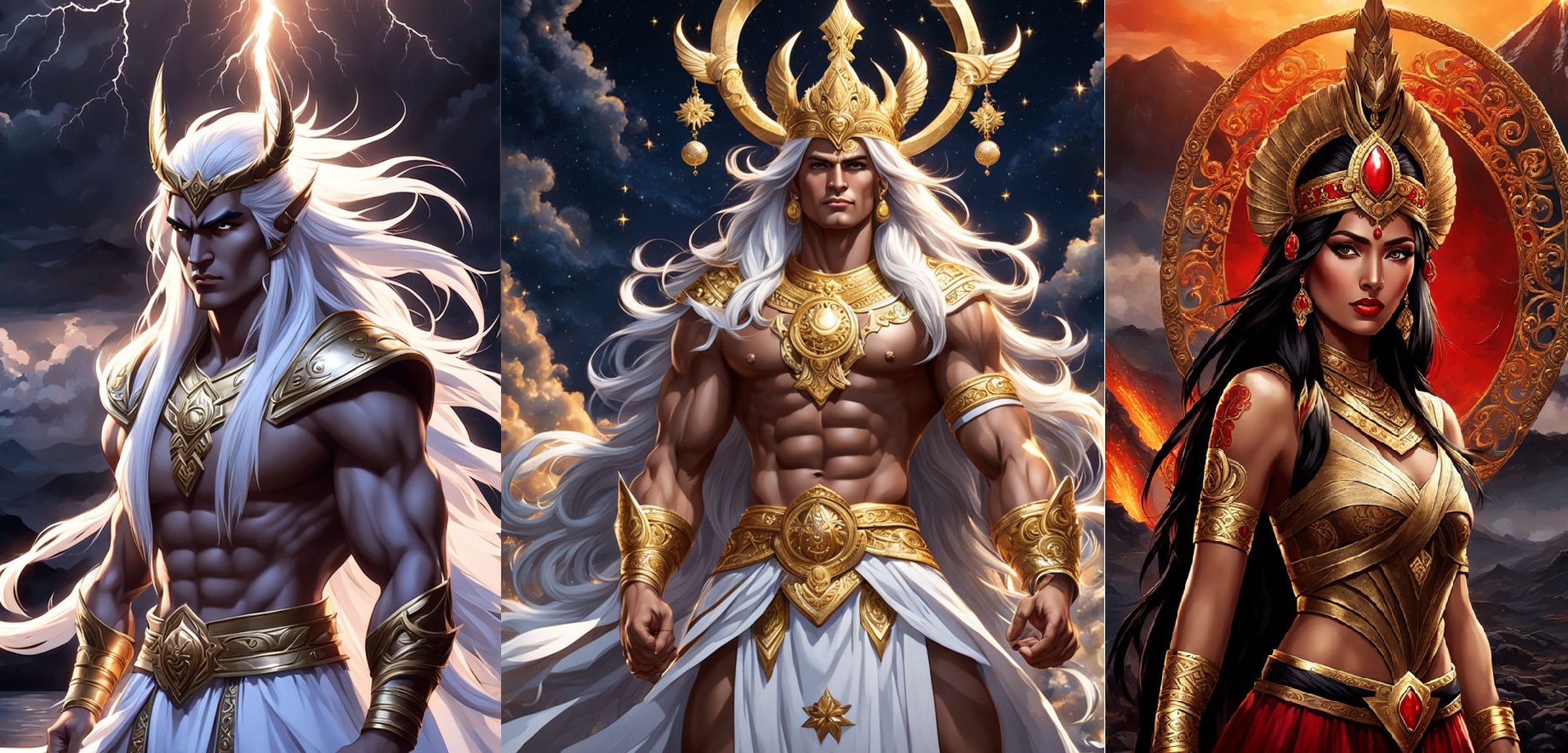
The term "Diwata" in Philippine mythology is a gender-neutral umbrella term encompassing gods, goddesses, nature spirits, nymphs, and fairies. It is commonly associated with small, winged fairies known as Lambana.
 |
| two female diwata and one male diwata |
In modern Filipino specifically in Tagalog usage, "Diwata" has come to mean muse, fairy, nymph, dryad, or even god, goddess, and other celestial beings.
The word originates from the Proto-Visayan term diwata, which is derived from the Malay word dewata and the Sanskrit देवता (devatā), meaning god, deity, or celestial being. In Philippine folklore, Diwata serves as a broad category for deities, celestial beings, nature guardians, and fairies. They are often depicted as beautiful, powerful entities, and the small winged fairies under this term are noted for their charm and mystical abilities
.jpeg) |
| Diwata |
Male Diwata
Male diwata is called Diwata too, one can also use Lambino, or Engkantado. or Lalaking Diwata depending if you want to point out that the diwata is male. In stories and folklore the male diwata are often depicted as sometimes as androgynous good looking, luminous and fair. In many contemporary oral stories the Male Diwata serves as a powerful spirit guide that bestows providence and magical items to good hearted people (same role as the Female Diwata). Magical items such as Mutya, Medalyon,Mutya ng alitaptap, mahiwagang tungkod, mutya ng lambino, ect. to fight the forces of evil and darkness. In some stories a Male diwata would pretend to be a white dog, or white owl, to watch over good hearted humans, in some stories they take temporary take the form of an old man testing the goodness of the heart of people. Then transforms into a extremely luminous good looking young man bestowing protection, prosperity ect.
 |
| Male Diwata owl form |
Lalaking Diwatang Gabay: The Male Spirit Guide
A Diwatang Gabay is a powerful male diwata who serves as a spirit guide, bestowing providence, protection, and magical artifacts upon good-hearted individuals. While the term "Diwata" is gender-neutral, male diwatas can also be referred to as Lambino, Engkantado, or Lalaking Diwata.
In folklore, male diwatas are often described as androgynous, luminous, and strikingly fair, embodying an ethereal beauty that transcends mortal standards. Like their female counterparts, they act as benevolent forces, aiding those with pure hearts in their struggles against darkness.
Male diwatas often disguise themselves to observe humanity. In various stories, they appear as:
- A white dog or white owl, silently watching over virtuous souls.
- An old man, testing a person's kindness and sincerity before revealing their true form.
- Upon proving one’s goodness, the diwata transforms into a radiant, breathtaking young man, bestowing blessings, protection, and prosperity.

.jpeg)
.jpeg)
 |
| Male Diwata (Fairy) |
.jpeg) |
| Male Diwata ( deity) |
.jpeg) |
| Diwata (war god) |


Stories on Youtube
Mandarangan - Ang mga mandarangan ay pangkalahatang tawag sa uri ng mga lalaking diwata ng pakikipaglaban. Mga diwata ng pakikipagdigma mga espiritung gabay ng mga mandirigma at mananabas at ng mga mas biolenteng tao. Madalas anyong maskuladong mga lalaki na maraming tatto. Mandarangan din ang ngalan ng isang bathala ng digmaan sa bandang gitnang Mindanao
 |
| Diwata Mandarangan |
 |
| Diwatang Mandarangan sa anyong Haring Ibon |
.jpeg) |
| Diwata (lambino) at mga lambana |
Mutya ng Diwata
Ang Lambino ay isa sa tawag ng mga sa lalaking diwata imbis engkantado. maladas ituring bilang diwatang gabay ng Mutya ng alitaptap
Ang Lambino ay isang nilalang mula sa alamat at mitolohiya ng Pilipinas, ngunit hindi ito gaanong kilala. Ang lambino karaniwang itinuturing na lalaking "diwata" At tulad ng mga Diwata na mas popular na mga espiritu sa kulturang Pilipino. Ang depinisyon ng lambino ay maaaring mag-iba depende sa rehiyon, ngunit sa pangkalahatan, ito ay nauugnay sa mga lokal na espiritu o nilalang na may koneksyon sa kalikasan.
Lambino in Philippine mythology is one of the terms for a male fairy or diwata. Though the word diwata is gender neautral when one wants to specify that the diwata is a male, one can use the term lambino instead. The other term for lambino is Engkantado (used by Tagalogs)
The term "lambino" is not widely recognized or well-documented in Philippine mythology or folklore compared to other figures like diwata, or aswang. Its meaning might vary regionally, a lesser-known entity within specific local traditions.
.jpeg)
Lambino is a Male Diwata
Gabay ng Mutya ng Alitaptap
While a diwata is often depicted as a more powerful nature deity or spirit in Filipino mythology, a lambino is a variant of diwata specifically a male diwata represent a more localized or less dominant spirit like a fairy. It might serve as a custodian of a specific natural site such as a small pond, a small river, a woodland. A lambino is a minor supernatural being compared to the grand stature of the celestial diwatas.
Lambino bilang Espiritu ng Kalikasan, bilang uri ng Diwata
- Ang lambino ay madalas ikinakategorya bilang isang espiritu ng kalikasan o uri ng diwata na karaniwang tagapangalaga ng mga burol o maliit na bundok,maliit na ilog, o maliit na kagubatan at kakahuyan.
- Bagamat may pagkakatulad sa mataas na diwata, ang lambino ay maaaring mas "lokal" o mas maliit ang saklaw ng kapangyarihan, at hindi gaanong makapangyarihan kumpara sa diyos o diyosa.
- Karaniwang inilalarawan bilang mapagpakumbaba o mapayapa ngunit maaaring magalit at magbigay ng parusa kung ang kalikasan ay sinira o hindi iginalang.
- Madalas sa mga kwentong bayan bilang tagapag bigay ng mutya ng alitaptap
Lalaking Diwatang Gabay o Engkantadong Gabay
Lambino in Philippine Mythology
The Lambino is a type of Diwata, specifically a male nature spirit, often regarded as a benevolent and less powerful counterpart to the gods and goddesses commonly referred to as diwata. While not deities, lambino are still revered for their control over aspects of nature and their ability to influence human affairs positively. Fairy type of diwata
.jpeg) |
| Lambino at mga Lambana |
Characteristics of the Lambino
- Nature Connection: Like their more powerful diwata counterparts, lambino are associated with natural elements such as forests, rivers, or hills.
- Striking Appearance: Lambino are renowned for their extraordinary male beauty. They are described as having fair, pearlescent skin that seems to glow softly, exuding an otherworldly charm. Their striking looks often set them apart from other spirits and deities, making them captivating and awe-inspiring figures in mythology.
- Jewels of Power (Mutya ng Lambino o Mutya ng Alitaptap, mutya ng kwago): They are believed to bestow mutya, mystical jewels that grant individuals luck, strength, and ferocity in combat. These gifts make the lambino sought after by warriors and adventurers. Mutya para sa mga manunugis.
- Benevolence: Lambino are known for their kind and generous nature. They aid those who respect the environment or approach them with pure intentions.
- Warrior Spirit: Despite their benevolence, they are also associated with combat, granting warriors not only physical strength but also a courageous heart and tactical acumen.
.jpeg)
Differences from Traditional Diwata
While powerful diwata are often regarded as godlike beings, the lambino is a variant of diwata more akin to a minor spirits, closer to the concept of male fairies. Their powers, though impressive, are limited compared to the full pantheon of diwata, making them akin to guardians or intermediaries rather than divine figures.
.jpeg) |
| Lambino |
Role in modern Folklore
The Lambino serve as a spirit guide of an antingero, or manunugis usually as a gabay or giver of Mutya ng alitaptap . Lambinos are symbols of balance—offering both protection and strength, but only to those deserving of their favor. They remind humans to value nature and maintain humility in their pursuits.
The Lambino, though lesser-known compared to the lambana and diwata, enriches Philippine oral mythology with its hybrid characteristics. As a bridge between the lambana's playful, localized nature and the diwata's grandeur, the Lambino serves as a fascinating example of the diversity and complexity of Filipino mythological traditions.
.jpeg) |
| Diwata |
Other Male Diwatas...
.jpeg) |
| Diwata |
.jpeg) |
| Diwata |
 |
| Diwata (lambino) at mga lambana |
.jpeg) |
| Diwata |
.jpeg) |
| Diwata |
 |
| Diwata |
.jpeg) |
| Diwata |
Engkantadong Kabinag
.jpeg) |
| Engkantadong Kabinag |
The Tale of the Engkantadong Kabinag: Guardian of Mount Isarog's Waters
Engkantadong Kabinag is a water spirit or a male diwata or a water lambino or Engkantado in Bicol folklore and mythology
.jpeg) |
| Engkantadong Kabinag |
The Kabinag, also called the Kanibag in local dialects, often appears near rivers and waterfalls as a comely young boy or a strikingly handsome man with long, flowing black hair and pale, flawless skin. Always dressed in white, he exudes an irresistible charm, often accompanied by a delicate scent of flowers. His presence is as captivating as the landscape he guards, and many believe that the Kabinag appears to those in need or those who have unknowingly disrespected his domain.
One of the most well-known tales tells of a young girl who became lost in the dense forests of Mount Isarog. As she wandered through the woods, panic set in when she realized she was near a fast-flowing river with no idea of how to return home. Just as fear began to overwhelm her, a young boy with long black hair and wearing pure white clothing appeared beside her. His skin was as pale as the moon, and his gentle demeanor immediately put the girl at ease. He guided her along the riverbank, leading her back to the familiar paths of the forest. But when she turned to thank him for his kindness, the boy had disappeared into thin air, leaving her with nothing but the faint scent of flowers in the air. She would later come to understand that her guide was none other than the Engkantadong Kabinag, watching over her in her time of need.
.jpeg) |
| Engkantadong Kabinag |
Another tale speaks of a young woman who ventured too far into the waterfall’s depths and began to drown. As the waters pulled her under, she felt strong arms lift her up and carry her to the safety of the riverbank. As she gasped for breath, she saw a handsome man, again with long black hair and dressed in white, adorned with delicate white flowers. He looked at her with a serene smile, and before she could thank him, he disappeared into the water, leaving behind the flowers that had been woven into his hair, now gently floating on the river’s surface.
.jpeg) |
| Engkantadong Kabinag |
Both stories reflect the Kabinag’s dual nature—benevolent and protective, yet elusive. He is often described as extraordinarily good-looking, with features that mesmerize those who encounter him. His pale skin, flowing black hair, and the scent of flowers are the hallmarks of his appearance, a signature that those who have seen him never forget. The Kabinag seems to appear only in moments of vulnerability, ensuring the safety of those near the water, though he always vanishes before gratitude can be expressed.
Local folklore warns, however, that the Kabinag's kindness should never be taken for granted. The people of Pili and Tigaon believe that he is also a guardian of respect for nature. Those who disturb the peace of the waterfalls or pollute the streams might not find themselves so lucky. It is said that people who have disrespected the water or the forest have mysteriously vanished, believed to have been taken by an angered Kabinag as punishment for their misdeeds.
To this day, many who visit the waterfalls of Mount Isarog still leave small offerings of flowers by the water’s edge, a gesture of respect for the Kabinag and the spirits of the mountain. Though sightings of the Engkantadong Kabinag are rare, his legend continues to inspire awe and reverence among the local communities, a reminder of the deep connection between humans and the enchanted natural world of Mount Isarog.
In these stories, the Engkantadong Kabinag symbolizes not only the beauty and mystery of Mount Isarog’s natural environment but also the local culture’s deep respect for the forces of nature. His presence serves as a protector, reminding people of the importance of preserving the land and water that sustain their lives, while also providing a sense of wonder and magic in the everyday world.
Orally transmitted stories undergo variations and evolve over time, resulting in numerous different versions. There are many different version told by Filipinos, and retold by Filipinos.
The orally transmitted mythology of the Philippines is intended for sharing and understanding. It is a dynamic narrative tradition that evolves over time, distinct from the standardized mythologies found in Western and European cultures. Unlike these established mythologies, the Philippine government has not mandated standardized versions of stories and legends.
Orally transmitted stories undergo variations and evolve over time, resulting in numerous different versions. There are many different version told by Filipinos, and retold by Filipinos.
Mga kwentong Pilipino at pagkukwento ay para sa lahat...
Philippine Mythology is for everyone—Filipinos, Filipinxs, and even foreigners! These stories are meant to be shared, enjoyed, and passed down through generations. They’re not set in stone and can have many different versions You don’t have to be an expert to enjoy them. These stories evolve with time, and everyone is welcome to listen, share, and get lost in their world. Mythology connects us all, no matter where we come from!


.jpeg)


.jpeg)
.jpeg)


.jpeg)

.jpeg)
.jpeg)

.jpeg)


.jpeg)
.jpeg)
.jpeg)
.jpeg)



.jpeg)


.jpeg)

.jpeg)