Showing posts with label Visayan mythology. Show all posts

Thursday, April 10, 2025

Why Some Foreigners Find It Hard to Understand Philippine Mythology


Why Some Foreigners Find It Hard to Understand Philippine Mythology

  1. It’s Not Linear or “Standardized”
    In many Western cultures, myths tend to follow a clear pattern beginning, middle, end. Stories are often written down in fixed forms.
    But in Philippine mythology, the same creature or tale can change from one region to another. The Aswang can be a vampire, a witch, or a shapeshifter depending on who tells the story. That can feel confusing or inconsistent to outsiders who expect one “official” version.

  2. It’s Deeply Tied to Culture and Language ( Aral aral din mag Tagalog o Filipino pag may time)
    These myths are told in Filipino or local dialects and other languages in the Philippines (Bisayan,Bikolano ect), and the meanings are often linked to cultural beliefsvalues, or superstitions that aren't easily translated. Foreigners may miss important context, symbolism, or the emotions behind the stories.

  3. Each Ethnolinguistic Group Has Its Own Mythology

    The Philippines is made up of over 7,000 islands and more than 100 ethnolinguistic groups, each with its own language, customs, and belief systems. Some myths overlap or intertwine, but many are unique to their language and culture.

    This makes Philippine mythology diverse but complex, especially for outsiders trying to understand it as a single system.

  4. It’s Oral and Flexible
    Philippine mythology wasn’t meant to be “fixed” in books. It lives through storytelling that changes over time and adapts to each storyteller. For people used to rigid systems, this feels unfamiliar even chaotic.

  5. Myth and Reality Often Overlap
    In the Philippines, mythology blends with everyday lifesome people still believe in these creatures or rituals. To outsiders, it might seem strange or too “superstitious,” especially if they don't understand the spiritual or emotional importance of the stories.


Why Some Foreigners Get Frustrated or Even Aggressive toward Filipino Storytellers

  1. Cultural Misunderstanding
    When someone doesn’t fully understand a culture, they may feel confused or overwhelmed. Instead of asking questions respectfully, some foreigners react with frustration or mockery. They may try to challenge or argue with Filipino storytellers rather than learning from them.

  2. Expecting “One Right Version”
    Many foreigners are used to mythologies being written down and standardized like Greek or Norse myths. So when they hear different versions of a Filipino legend, they may accuse the storyteller of being “wrong.” They don’t realize that oral tradition thrives on variation. In Philippine mythology, many versions can be true.

  3. Clout-Chasing and Division
    Sadly, some foreigners try to insert themselves into Filipino mythology discussions just to get attention. They clout-chase by acting like experts or stirring controversy, often without deep understanding or respect for the culture. Some even go as far as pitting Filipinos against each other debating whose version is “correct,” criticizing local creators, or spreading drama to get more clicks, followers, or views.
    This behavior is not only absurd. it’s harmful. It turns a beautiful, shared heritage into a popularity contest.

  4. Colonial Mindset and Ego
    There are still people who carry colonial attitudes, treating Filipino stories as “less valid” just because they’re not Western. When Filipinos speak with confidence about their culture, these individuals may feel threatened. Instead of being humble and curious, they try to dominate the conversation or discredit the storytellers.

  5. Bias and Colonial Mindset (Again yes ulit ulit nalang)
    Sadly, some people still carry a mindset that non-Western cultures are “less serious” or “less real.” They may look down on local beliefs or storytellers as “uneducated” or “making things up,” which is both unfair and disrespectful.

Dear Foreigners Who Wanna Learn Philippine Mythology

Philippine Mythology Is Not Netflix Season 1.

There’s no “official” storyline. No cinematic universe where everyone agrees. One town says the Manananggal flies at night. Another says she sells kakanin during fiestas. Both are correct. Don’t look for consistency, embrace the chaos. It’s part of the charm.

Don’t Bring That Western Fixed-Mindset Here.
This isn’t Greek or Norse mythology with one version and a cast list. Ours is alive, constantly changing, and told differently across our 7,641 islands. It’s not broken, it’s beautifully flexible. No need to fix it, just feel it.

 Learn a Bit of the Language Or Three. (hindi yung kami pa ung mag a adjust)
Want to go deeper? Learn some Tagalog, Bisaya, Ilocano, or any of our many local languages. Mythology isn’t just in the story, it’s in the words, the accents, the flavor. You don’t need to be fluent, just willing. Locals will appreciate the effort more than perfect grammar.

Don’t Stalk or Harass Storytellers Online.

This should be obvious butt some folks need the reminder. Disagreeing is fine, but attacking, doxxing, or bullying creators? Big no-no. You’re not “correcting history,” you’re just being creepy. Respect the people keeping these stories alive.


Clout Is Not a Personality.
Please don’t use Filipino myths to farm views, start drama, or pit Filipinos against each other. These stories are meant to unite, not divide. If your content is causing more fights than fascination, it might be time to step back and rethink the approach.

Mythology Is for Everyone but It Starts With Respect.
Philippine mythology welcomes all curious hearts. It’s a bridge between generations, islands, and even countries. But like any culture, it asks you to come with humilityrespect, and a willingness to listen. The goal isn’t to own it, but to learn from it and maybe fall in love along the way.


Reminder

Avoiding Foreign Manipulation: Weaponizing myths and stories and using them as an excuse to attack, harass and even stalk storytellers or communities risks distorting their purpose. Myths are meant to unify, educate, or entertain, not to create division or hostility among Filipinos.


Filipino mythology  belongs to everyone - Filipinos, Filipinix, and even foreigners. These stories are meant to unite, inspire hope, and empower. They are for all, ever-evolving yet forever a cultural treasure.

Both oral and written mythology in the Philippines are valid because they serve different but equally important roles in preserving Filipino heritage. What is truly harmful is when foreigners manipulate these discussions for personal gain, attempting to invalidate one aspect of Filipino mythology to cause division. Instead of falling for such tactics, Filipinos should embrace the richness and diversity of their own stories, ensuring that both oral and written traditions continue to thrive.

Orally transmitted stories undergo variations and evolve over time, resulting in numerous different versions. There are many different version told by Filipinos, and retold by Filipinos.

The orally transmitted mythology of the Philippines is intended for sharing and understanding. It is a dynamic narrative tradition that evolves over time, distinct from the standardized mythologies found in Western and European cultures. Unlike these established mythologies, the Philippine government has not mandated standardized versions of stories and legends.

Orally transmitted stories undergo variations and evolve over time, resulting in numerous different versions. There are many different version told by Filipinos, and retold by Filipinos.


REMINDER

Mga kwentong Pilipino at pagkukwento ay para sa lahat...

Philippine Mythology is for everyone—Filipinos, Filipinxs, and even foreigners! These stories are meant to be shared, enjoyed, and passed down through generations. They’re not set in stone and can have many different versions You don’t have to be an expert to enjoy them. These stories evolve with time, and everyone is welcome to listen, share, and get lost in their world. Mythology connects us all, no matter where we come from!


Saturday, October 12, 2024

Philippine Mythology vs. History: Understanding the Difference.


Mythology vs. History: Understanding the Difference

Mythology refers to a collection of traditional stories, often involving gods, supernatural beings, and heroes, which explain the worldview, customs, and beliefs of a culture. It offers a way to understand how people in the past made sense of the natural world, human behavior, and the divine. Myths are not bound by facts or historical accuracy but instead convey deeper truths about human existence and values.

History, on the other hand, is the study of past events based on evidence, such as written records, artifacts, and oral accounts. History is grounded in facts, aiming to provide an accurate account of what really happened. It seeks to interpret and analyze past occurrences, understanding causes, effects, and significance based on documented evidence.

Both mythology and history shape how people understand their culture, but they serve different purposes. While mythology provides a symbolic and cultural explanation of life, history focuses on factual, documented realities.


What is Philippine Mythology?

Philippine mythology is the body of myths, legends, and traditional stories that explain the beliefs, practices, and worldviews of the Filipino people. It is an intricate mix of animism, Hinduism, Buddhism, and the influences of pre-colonial belief systems. These stories tell of Diwata (nature deities), Anito (ancestral spirits), Engkanto (nature spirits), Aswang (shape-shifting creatures), and countless other supernatural beings that were worshiped, feared, and respected by the early inhabitants of the Philippines.

Unlike the mythologies of the West (like Greek or Norse mythology), which are often viewed as relics of the past, Philippine mythology is very much alive today. These myths are still told and retold by Filipinos across the archipelago, with each region having its own version of stories that have been passed down for centuries.

The stories change over time, evolving with each retelling. For example, some spirits or creatures may have gained new characteristics based on current cultural and social contexts, while others may have been blended with Christian beliefs introduced during colonization. This dynamic nature makes Philippine mythology an ever-evolving tapestry of beliefs, influenced by the past but continuously adapting to the present.


Philippine Mythology vs. Folk Religion

This is something many foreigners and even Filipinos born and raised aboard seem to struggle with. the confuse Philippine mythology with the folk religion. maybe stemming from westernized view of things. Because they usually start with Greek mythology they are dead set on views that are very foreign.

It is important not to confuse Philippine mythology with folk religion. While mythology consists of the stories and characters that explain the world, folk religion is about actual practices and rituals.

  • Philippine mythology is about the stories of gods, goddesses, spirits, and creatures—mythical narratives that explain life and the supernatural.
  • Folk religion, in contrast, refers to the actual belief systems and rituals practiced by Filipino communities, especially in rural areas, where people might invoke spirits, offer sacrifices, or perform traditional healing practices.


Folk religion may draw from mythology, but it is also influenced by Christianity, colonialism, and various other belief systems. While Philippine mythology helps explain the origin and power of supernatural beings, folk religion involves how Filipinos interact with and worship these beings in their daily lives.


An Entheocide of Precolonial Beliefs


Philippine mythology reflects a rich pre-colonial belief system that existed before the arrival of the Spanish colonizers in the 16th century. At that time, the Philippines had a diverse spiritual landscape, heavily influenced by animism, Hinduism, and Buddhism. These religions were evident in the worship of Bathala (a supreme god in Tagalog mythology), the reverence for Diwata, and various religious symbols resembling Hindu and Buddhist iconography.


However, colonization led to the entheocide (the destruction of indigenous beliefs) of many of these precolonial systems. The Spanish missionaries introduced Catholicism, often demonizing or erasing native gods and spirits, branding them as evil or superstitious. Although the introduction of Christianity caused a decline in the formal worship of many of these ancient deities, the stories and myths remained ingrained in Filipino culture. In fact, many Filipinos fused Catholic saints with native spirits, giving rise to syncretic beliefs that blended both systems.

Despite attempts to suppress it, Philippine mythology remains alive today. It continues to be retold in stories, performances, rituals, and celebrations, especially in rural areas where indigenous traditions are preserved. The myths of the Diwata, Aswang, and Engkanto live on, surviving the changes brought by colonialism and modernization.


The Uniqueness of Philippine Mythology


Philippine mythology is unique in its non-Western roots. While Western mythologies like those of the Greeks and Romans often revolve around a pantheon of gods residing in specific realms, Philippine mythology is deeply connected to nature and the land. The Diwata, Anito, and other spirits are often seen as guardians of the natural world—forests, rivers, mountains—reflecting the strong animist beliefs of early Filipinos.

Moreover, Philippine mythology’s strength lies in its regional diversity. Each island or region has its own version of myths, making the Philippine mythological tradition rich and varied. The tales told in the Visayas may differ from those in Luzon or Mindanao, but they are all part of the larger narrative that connects Filipinos to their land and history.


Confusing Philippine Mythology with Western Concepts

Unfortunately, Western and foreign perspectives often mix up or misunderstand Philippine mythology. Westerners tend to compare it to their own mythologies, particularly Greek myths, due to the global familiarity with those stories. This comparison can be problematic because Philippine mythology is fundamentally different in structure, origin, and cultural context.

Greek mythology is often focused on gods that govern human affairs from distant, grand locations, while Philippine mythology is centered around gods, spirits directly tied to nature, protecting local communities, forests, rivers, and natural resources. These deities are not remote figures but are integrated into daily life, influencing the environment and personal well-being.


Foreigners—especially those familiar with Western mythologies—sometimes impose their ideas, thinking of Philippine mythology as a simplified version of Greek myths. This is problematic because the Philippines had No contact with Greece in pre-colonial or colonial times. Therefore, trying to force Greek concepts onto Filipino myths is both inaccurate and dismissive of the rich, indigenous tradition that evolved naturally in the Philippines.

Imposing Western or Greek frameworks on Philippine mythology erases the cultural uniqueness and context of these stories. The Philippines had its own belief systems, deeply rooted in local landscapes and ancestral veneration, long before colonization or any Western influence.


Mythology Lives On: A Living Tradition

Unlike in the West, where myths are often viewed as relics of the past, Philippine mythology is still a living tradition. These stories are constantly evolving, being retold in everyday conversations, passed down through generations, and even featured in modern media, such as films, TV shows, and literature. In many Filipino communities, there is still a belief in Engkanto, Diwata, and other mythological creatures, especially in rural areas where folklore remains deeply embedded in daily life.


Philippine mythology is not static. As it is passed down orally to this day, it is subject to variations, regional differences, and personal interpretations. This fluidity allows it to adapt and stay relevant, reflecting the evolving culture and identity of the Filipino people. It is more than just ancient stories; it is a reflection of the Filipino soul, surviving colonization and modern influences to remain an integral part of the nation's identity.


Philippine mythology is a unique, living tradition that offers insights into the beliefs and worldview of pre-colonial Filipinos. It continues to evolve and adapt, passing from one generation to the next. While influenced by colonial forces, it remains distinctly Filipino, reflecting the land, people, and history of the archipelago. It is essential to recognize its value and not confuse it with folk religion, as mythology carries the stories and symbols that define a people’s culture and identity.


Reminder

Avoiding Foreign Manipulation: Weaponizing myths and stories and using them as an excuse to attack, harass and even stalk storytellers or communities risks distorting their purpose. Myths are meant to unify, educate, or entertain, not to create division or hostility among Filipinos.


Orally transmitted stories undergo variations and evolve over time, resulting in numerous different versions. There are many different version told by Filipinos, and retold by Filipinos.

The orally transmitted mythology of the Philippines is intended for sharing and understanding. It is a dynamic narrative tradition that evolves over time, distinct from the standardized mythologies found in Western and European cultures. Unlike these established mythologies, the Philippine government has not mandated standardized versions of stories and legends.

Orally transmitted stories undergo variations and evolve over time, resulting in numerous different versions. There are many different version told by Filipinos, and retold by Filipinos.


REMINDER

Mga kwentong Pilipino at pagkukwento ay para sa lahat...

Philippine Mythology is for everyone—Filipinos, Filipinxs, and even foreigners! These stories are meant to be shared, enjoyed, and passed down through generations. They’re not set in stone and can have many different versions You don’t have to be an expert to enjoy them. These stories evolve with time, and everyone is welcome to listen, share, and get lost in their world. Mythology connects us all, no matter where we come from!

Bicol and Filipino mythology belongs to everyone—Filipinos, Filipinix, and even foreigners. These stories are meant to unite, inspire hope, and empower. They are for all, ever-evolving yet forever a cultural treasure.

Monday, September 2, 2024

Bangkilan


Bangkilan


Bangkilan


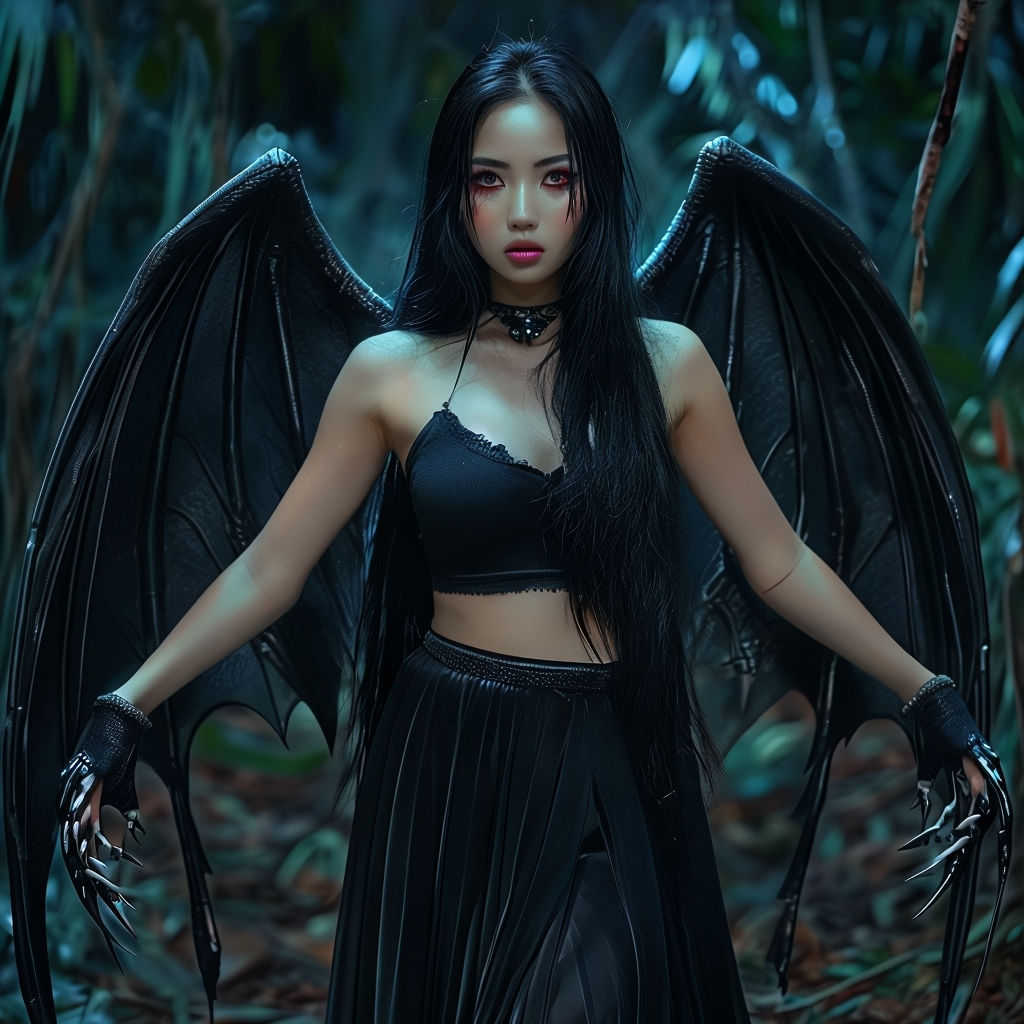
The Bangkilan is a type of Aswang fabled for their beauty and ferocity and shape-shifting abilities, present in oral mythology and  folklore all over from parts of Visayas to Bicol most prominent stories agree they are situated in Palawan


Bangkilan

The Bangkilan: A Unique and High-Ranking Aswang

Among the different kinds of aswang, the Bangkilan is considered one of the most powerful and high-ranking variants. Unlike most aswangs, who carry a single black stone (mutya) that they must pass on before they die, the Bangkilan is unique in that she harbors multiple black pearls and chicks inside her body. This ability allows her to generate more black stones and successors without needing to face death. As a result, the Bangkilan is an exceptional aswang who can continuously pass on  dark powers without the traditional limitations faced by others of her kind. The Bangkilan can also transform into different creatures of the night such a huge black boar, dog, bird ect. her ability to transform humans into different breeds of aswang, such as kiwing, awok, abat, asbo, and abwak.


Bangkilan


Bangkilan

The Bangkilan's Powers and Characteristics

During the day, the Bangkilan either disguises herself as a huge black boar or as a beautiful maiden, seamlessly blending into human society. Her charm and beauty make her appear harmless, allowing her to move unnoticed among people. However, in her aswang form, even though she retains her beautiful maiden-like appearance, she becomes far more deadly. The Bangkilan's hands transform into sharp claws, capable of cutting and killing her prey with ease. Additionally, she sports small bat wings on her back, which allow her to move swiftly and silently through the night sky. These wings enable fast flight, making her a highly effective and elusive predator. 

This duality of beauty and terror is a key feature of the Bangkilan. She can lure unsuspecting victims with her appearance while simultaneously harnessing her monstrous abilities to hunt them down. Her ability to shapeshift into various terrifying creatures remains, but her hybrid form as a beautiful maiden with deadly claws and wings is particularly feared because of the deceptive nature of her appearance.


Bangkilan


Bangkilan

The multiple black pearls and chicks within her body symbolize her extraordinary level of power. These pearls serve as a reservoir of dark energy, allowing the Bangkilan to continue her terrifying legacy indefinitely. In contrast to ordinary aswangs, who must transfer their mutya to a successor and perish soon after, the Bangkilan can produce new chicks and stones, giving her the unique ability to prolong her life and influence.

Bangkilan


Role and Status Among Aswang

The Bangkilan holds a high status in the aswang hierarchy, feared and respected by other types of aswang. Her ability to command and dominate other aswang, especially those considered weaker (Kiwig, Awok,Motog,Abwak), makes her a dangerous and influential figure in the supernatural world. The presence of multiple black pearls also grants her additional strength, speed, and cunning, making her nearly unstoppable. Bangkilan are important because they can make humans into other types of Aswang.


Bangkilan

Bangkilan


Bangkilan kontra Gabunan

In folklore Bangkilan is portrayed as natural enemies of the Gabunan .The Gabunan, an apex predator among aswangs, tales often depict Gabunans as dark-skinned, fierce creatures with a taste for consuming other types of aswangs. This trait makes them the natural enemies of the Bangkilan, as they hunt and devour the black pearls and chicks that reside within these powerful aswangs. 


With her capacity to command, manipulate, and reproduce her powers indefinitely, and with her hybrid form of beauty and terror, the Bangkilan stands as one of the most feared and respected aswang—a figure whose existence is shrouded in legend and terror.


Reminder

Avoiding Foreign Manipulation: Weaponizing myths and stories and using them as an excuse to attack, harass and even stalk storytellers or communities risks distorting their purpose. Myths are meant to unify, educate, or entertain, not to create division or hostility among Filipinos.


Filipino mythology belongs to everyone—Filipinos, Filipinix, and even foreigners. These stories are meant to unite, inspire hope, and empower. They are for all, ever-evolving yet forever a cultural treasure.


Orally transmitted stories undergo variations and evolve over time, resulting in numerous different versions. There are many different version told by Filipinos, and retold by Filipinos.

The orally transmitted mythology of the Philippines is intended for sharing and understanding. It is a dynamic narrative tradition that evolves over time, distinct from the standardized mythologies found in Western and European cultures. Unlike these established mythologies, the Philippine government has not mandated standardized versions of stories and legends.

Orally transmitted stories undergo variations and evolve over time, resulting in numerous different versions. There are many different version told by Filipinos, and retold by Filipinos.


REMINDER

Mga kwentong Pilipino at pagkukwento ay para sa lahat...

Philippine Mythology is for everyone—Filipinos, Filipinxs, and even foreigners! These stories are meant to be shared, enjoyed, and passed down through generations. They’re not set in stone and can have many different versions You don’t have to be an expert to enjoy them. These stories evolve with time, and everyone is welcome to listen, share, and get lost in their world. Mythology connects us all, no matter where we come from!

Tuesday, August 27, 2024

REDISCOVER KAN-LAON IN BICOL MYTHOLOGY


KANLAON
 

Kanlaon in Bicolano mythology is the powerful deity of fire and destruction, considered a foreign deity (from the other side aka Visayas) an ominous figure associated with volcanic eruptions, wildfires, and earthquakes. Stories depict him as towering muscular and beastly, evil and ruthless, with dark skin and covered with tattoos and some of his tattoos were golden. Kanlaon is considered one of the ''foreign'' gods in Ibalong brought by the Visayan people. Nestled within the fiery depths of Kanlaon Volcano, this malevolent deity commands the destructive forces of locusts and fire. The very elements that sustain life can, in the hands of Kanlaon, become instruments of chaos and devastation. As the harbinger of calamity, Kanlaon stands in stark contrast to the benevolent supreme deity Gugurang. In the mythos of the Bikolano people, Kan Laon, an malevolent deity would intermittently express his envy and discontent by dispatching locusts to devastate the agricultural lands of Ibalong, simultaneously instigating wildfires. In response, Gugurang, another formidable deity, would retaliate by deploying a squadron of avian-humanoid entities and other airborne creatures. Furthermore, Gugurang enlisted the assistance of thunder and lightning deities, namely Linti and Dologdog, orchestrating a formidable assault against Mount Kanlaon.


Kanlaon deity


In Bicolano Mythology

In Bicolano lore, Kan-Laon is depicted as a malevolent deity associated with volcanic eruptions, wildfires, and earthquakes. Residing in the fiery depths of Mt. Kanlaon, he is described as a towering, muscular figure with dark skin, covered in intimidating tattoos, some of which are golden. Kan-Laon is perceived as an agent of calamity, wielding the elements of locusts and fire to wreak havoc on the land.

Kan-Laon’s antagonism is particularly evident in his conflicts with Gugurang, the supreme deity of Bicolano mythology, who is considered a benevolent protector and creator. The cosmic struggle between Kan-Laon and Gugurang symbolizes the eternal battle between destruction and creation, chaos and order. Kan-Laon's wrath often manifests in the form of locust swarms and wildfires, devastating agricultural lands and challenging Gugurang, who retaliates with a host of avian-humanoid entities and thunder deities such as Linti and Dologdog.

The enmity between Kan-Laon and Gugurang highlights a deeper mythological narrative of cosmic balance, with Gugurang striving to counteract the destruction wrought by Kan-Laon.


The enmity between Kanlaon and Gugurang adds layers to the narrative, portraying a cosmic struggle between opposing forces. Gugurang, the supreme deity in Bicolano mythology, assumes the role of a protector and creator. The clashes between Gugurang and Kanlaon symbolize the perpetual battle between creation and destruction, order and chaos.

Batala VS Kanlaon in Bikol Mythology

Kanlaon and evil deity would cause havoc using his swarm of locus and wildfire all, Some stories tell that the deity Batala clashed with Kanlaon. But Kanlaon was very powerful, he needed the help of Linti and Dalogdog to defeat the powerful but evil god.


Kan-laon

Kanlaon vs. Gugurang in Visayan Mythology:

In the tales of the Visayan people, Gugurang takes on a different persona. Seen as a proud and boastful lesser god, Gugurang would attack sending his cadre of bird-men creatures and other flying creatures. But would end up defeated by Laon. Gugurang remains under the more powerful and just Laon


Laon: The Supreme Creator and goddess of the Visayan Peoples

Laon, whose name translates to "the ancient one," is a revered deity in the pre-colonial animist beliefs of the Visayan peoples in the Philippines. As a supreme creator deity, Laon holds a prominent place in Visayan mythology, embodying aspects of creation, agriculture, the sky, and divine justice. Her influence and worship span across various Visayan groups, including the Aklanon, Capiznon, Cebuano, Hiligaynon, Karay-a, Suludnon, and Waray people.

Laon


Attributes and Domains

  • Supreme Creator: Laon is traditionally associated with the creation of the world and its inhabitants. According to Visayan creation myths, Laon played a crucial role in the emergence of life. She is often credited with creating the first creature, typically a bird, which then discovered the first islands and indirectly led to the creation of other creatures, including the first humans. These humans were often found within a bamboo or rattan stem, symbolizing the beginning of human life.

  • Dual Aspects: Laon is unique in her dual nature, embodying both female and male aspects. In her female form, she is seen as a deity of justice, equality, and agricultural fertility. Her male aspect, known as Makapatag (or Macapatag), is depicted as a more destructive figure associated with punishment and vengeance. This duality highlights the balance between benevolence and severity within her divine nature.

  • Association with Kanlaon Volcano: Laon's domain is traditionally linked with Mt. Kanlaon on the island of Negros, the highest peak in the Visayas. The volcano is considered a sacred site where ancient shamans (babaylan) performed rituals and offered gifts to honor Laon, especially during good harvest seasons. The connection with the volcano underscores Laon’s role as a deity intertwined with both creation and natural forces.

Kan-Laon in Visayan Mythology:

Beyond the adversarial relationship with Gugurang, Kanlaon holds a distinct place in Visayan mythology. In Pre-Hispanic times, Kan-Laon was venerated as the Supreme Ruler, embodying authority over time itself. The name "Kan-Laon" translates to "One Who Is the Ruler Of Time" in the Visayan language.


Laon

the supreme deity; goddess said to reside in the mountain at the neighbouring island of Negros Makapatag-Malaon

the supreme deity with both male and female aspect; the male aspect is Makapatag, the leveller who is fearful and destructive, while the female aspect is Malaon

Lalahon

one of the aspects of Laon, beautiful goddess of harvest and agriculture.

Deity Lalahon, revered on the island of Negros (formerly known as Buglas), was venerated to ensure a bountiful harvest in the agricultural fields. In instances where the populace displeased or provoked her, Lalahon would occasionally manifest her displeasure by sending locusts to consume the crops. Additionally recognized as "one who disposes everything and renders everything equal," an alternative appellation bestowed upon her by certain groups like the Bisayans of Ibabao, she was known as Makapatag. This nomenclature drew parallels between Lalahon and the concept of divine justice, emphasizing her association with the equality inherent in the cosmic order.


Laon as a benevolent goddess, provider and protector.


Additionally, Kanlaon takes on a benevolent role as a deity of agriculture and harvests. The stratovolcano, bearing the same name, becomes a sacred site where native priests and priestesses perform rituals during bountiful harvest seasons. Offerings and ceremonies on Mt. Kanlaon symbolize the delicate balance between appeasing the deity's destructive potential and seeking its favor for abundant crops.

The mythology all over the archipelago is interwoven one way or the other. Mythology and perception shaped by the waves. Kanlaon, the malevolent god of fire and destruction, manifests differently in the mythologies of Bicolano and Visayan cultures. Its adversarial relationship with Gugurang in Bicolano tales and the cosmic battles in Visayan narratives contribute to a complex understanding of this deity. Beyond its destructive nature, Kanlaon's association with agriculture in Visayan mythology reflects the dualities inherent in ancient belief systems – a deity capable of both creation and devastation, embodying the intricate dance between life and death.


REMINDER


The orally transmitted mythology of the Philippines is intended for sharing and understanding, not for appropriation, commercial exploitation, or the promotion of foreigners and foreign products. It is a dynamic narrative tradition that evolves over time, distinct from the standardized mythologies found in Western and European cultures. Unlike these established mythologies, the Philippine government has not mandated standardized versions of stories and legends.

Orally transmitted stories undergo variations and evolve over time, resulting in numerous different versions. There are many different version told by Filipinos,and retold by Filipinos.